Hearing aids in noise: hear the same scene with and without AI
Phonak research · 28 October 2026 · 5 min read

A lively conversation, noise all around, and that laugh that reaches you a second after everyone else’s. No percentage or decibel figure really tells you what a hearing aid changes in noise: you have to hear it.
Our short video lets you hear the same 13 seconds of a conversation twice, recorded through real Phonak hearing aids in a noisy place: first with the artificial intelligence switched off, then switched on. The picture does not change, only the sound does. Turn the sound on, ideally with headphones: a phone speaker flattens much of the difference.
The scene: a day at the amusement park
A summer day, the crowd, the rides. Three people: a man wearing a small hearing aid behind his ear, his wife and a friend. The friend jokes that in this heat, there is nothing like getting soaked on the water ride. The wife laughs. One of those ordinary moments that, with a hearing loss, slip away without anyone noticing. The picture is a cartoon, the sound is not: you hear what reached his hearing aids.
First pass, AI off: the late smile
The noise of the park sits at the same level as the voices. The subtitles show only a few scattered words. The man leans in, frowns, and when his wife laughs, he smiles a beat after the others.
Many people with hearing loss know that late smile. You follow the tone, you guess the words, you laugh because the others laugh. It is exhausting, and it is often why people end up giving up restaurants or evenings out with friends. Watching this video with a parent in mind? It can be a way to start the conversation; here are a few tips on raising the subject with a loved one.
Second pass, AI on: the same moment
The picture goes back to the start. Same people, same words, same noise; only the recording changes. The voices stand out from the crowd, the subtitles are complete, and he laughs at the same time as everyone else.
This is not an edit: the two recordings cover exactly the same moment, cut at the same instants, with no cleaning or retouching.
What AI does in a hearing aid
Two mechanisms are at work. The first recognises the place: like every recent Phonak hearing aid, the device identifies the kind of environment (quiet, music, street, crowd) and adjusts its settings. This has existed for years.
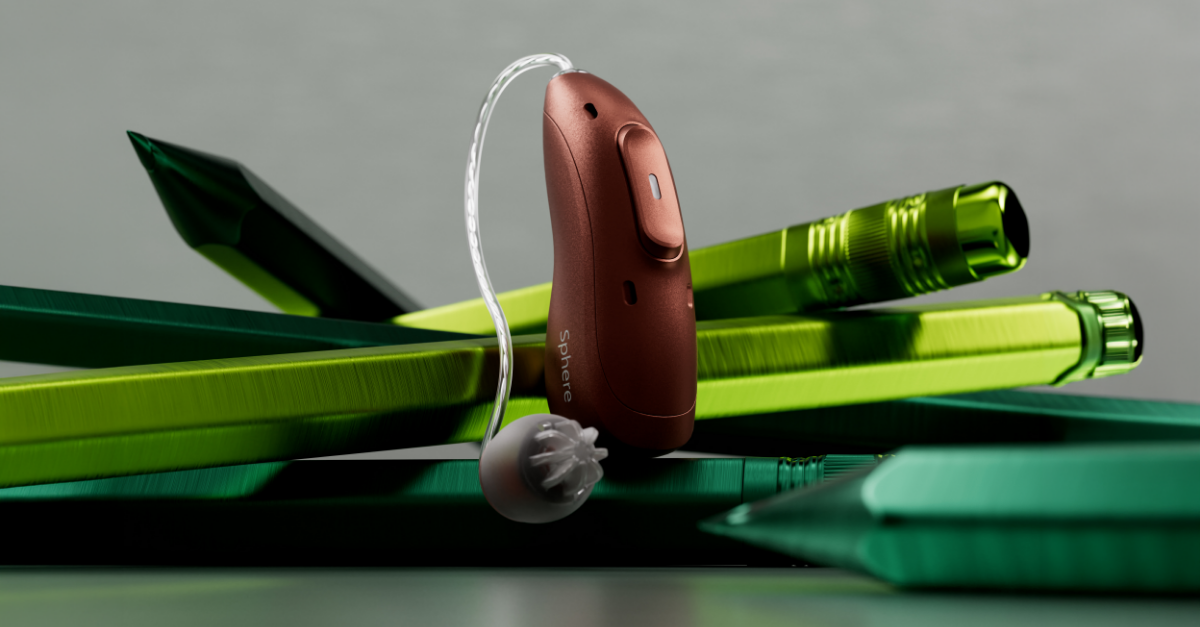
The second cleans up the sound. On Sphere models, a second chip dedicated to artificial intelligence runs a neural network in real time, trained to separate voices from noise. Rather than favouring the direction you are looking in, it keeps what has the signature of speech and reduces the rest. It switches on by itself when the noise rises.
That chip is what you hear in the video. In the laboratory, participants in a Phonak study could on average tolerate 3.2 decibels more noise and still understand just as well, roughly a doubling of the noise’s sound energy. Figures and limits in our article Hearing aids and AI: what the Phonak study actually shows.
Which hearing aid you are hearing
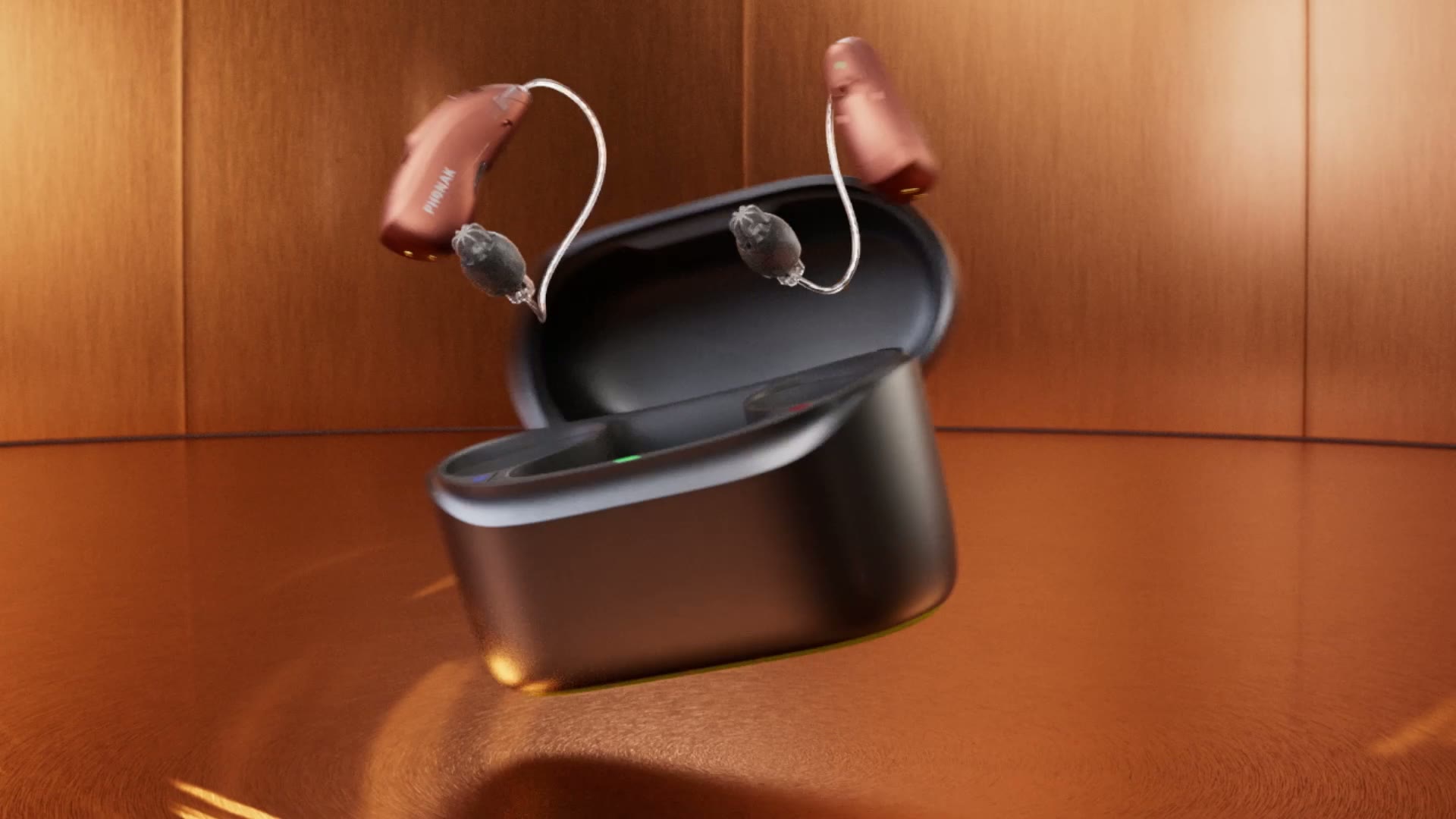
The recording was made with the previous Sphere generation, not with the new Audéo EON Sphere; the video says so in small print. The EON generation keeps the same principle with a newer chip which, according to Phonak, uses 37% less energy: it can switch on earlier, at more moderate noise levels, and stay active for longer. The housing is also smaller and lighter. We come back to this in our articles on the real battery life of a rechargeable hearing aid and on how discreet a hearing aid can be.
What a video cannot tell you
- A chosen moment. The sound comes from a Phonak demonstration recording, selected by the manufacturer.
- It is not your ear. You hear the output of the hearing aids, played back through your own speakers; a wearer perceives it through their own hearing loss and their own fitting.
- An average is not a promise. The benefit measured in 22 participants is an average; yours may be higher or lower.
- The cartoon is staged. Only the sound is real.
Frequently asked questions
Is a hearing aid’s AI always on?
No. The speech-separation chip switches on automatically when the environment gets noisy, and stays idle in quiet surroundings.
Will I hear exactly what the video plays?
Not exactly: it depends on your hearing loss, your fitting and the place. Only a trial tells you what the difference means for you.
Do I need a Sphere model to benefit?
Yes. Environment recognition is also built into the Audéo EON R, but the speech-separation chip is only found in Sphere models. Prices for both models are on our prices page.
Hear the difference for yourself
The test that counts is your own. Our centres in Morges and Vevey offer a free three-week trial, with devices fitted to your hearing and no obligation to buy. Take them to the restaurant, a café terrace, the family table, then come and tell us about it.
Sources
Phonak demonstration recording, previous Sphere generation, AI off and AI on: two recordings of the same moment in a noisy outdoor setting, used unedited. Excerpt from 0:38 to 0:51.
Latzel, M., Heeren, J., Lesimple, C., Gökalan, M., Puhlemann, L. and Haf, C. (October 2025). Spheric Speech Clarity improves speech understanding and reduces both listening effort and fatigue. Phonak Field Study News, study conducted at the Hörzentrum Oldenburg. Available in the Phonak evidence library.
Sonova AG (24 August 2026). New EON hearing aid portfolio strengthens Phonak’s leadership in speech understanding, scene intelligence and Made-For-All connectivity. Press release, Stäfa. States that the EON generation’s speech-in-noise feature uses 37% less energy than the previous generation.